


.jpg)


5-1 Koishikawa
Bunkyo, Tokyo
Japan


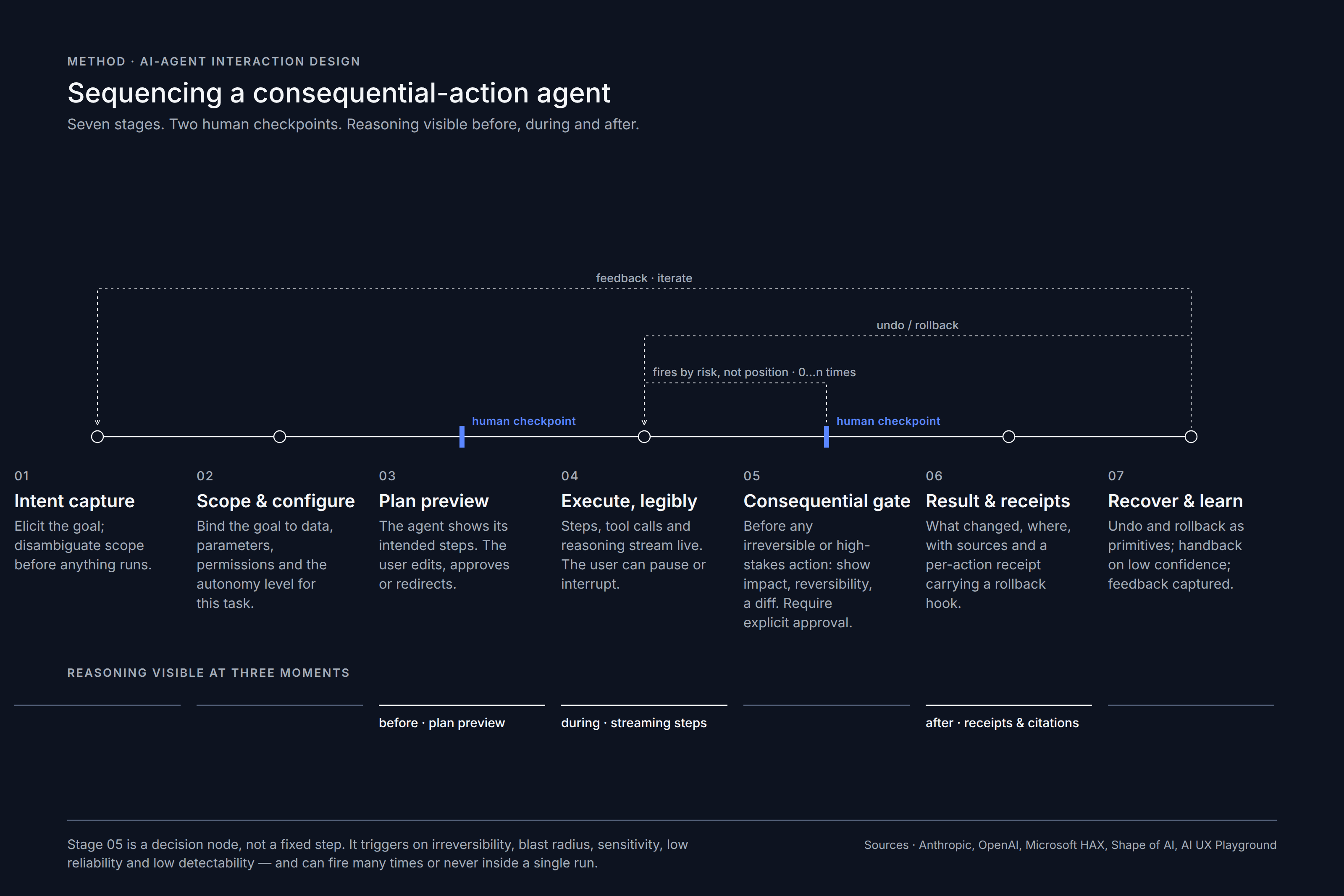
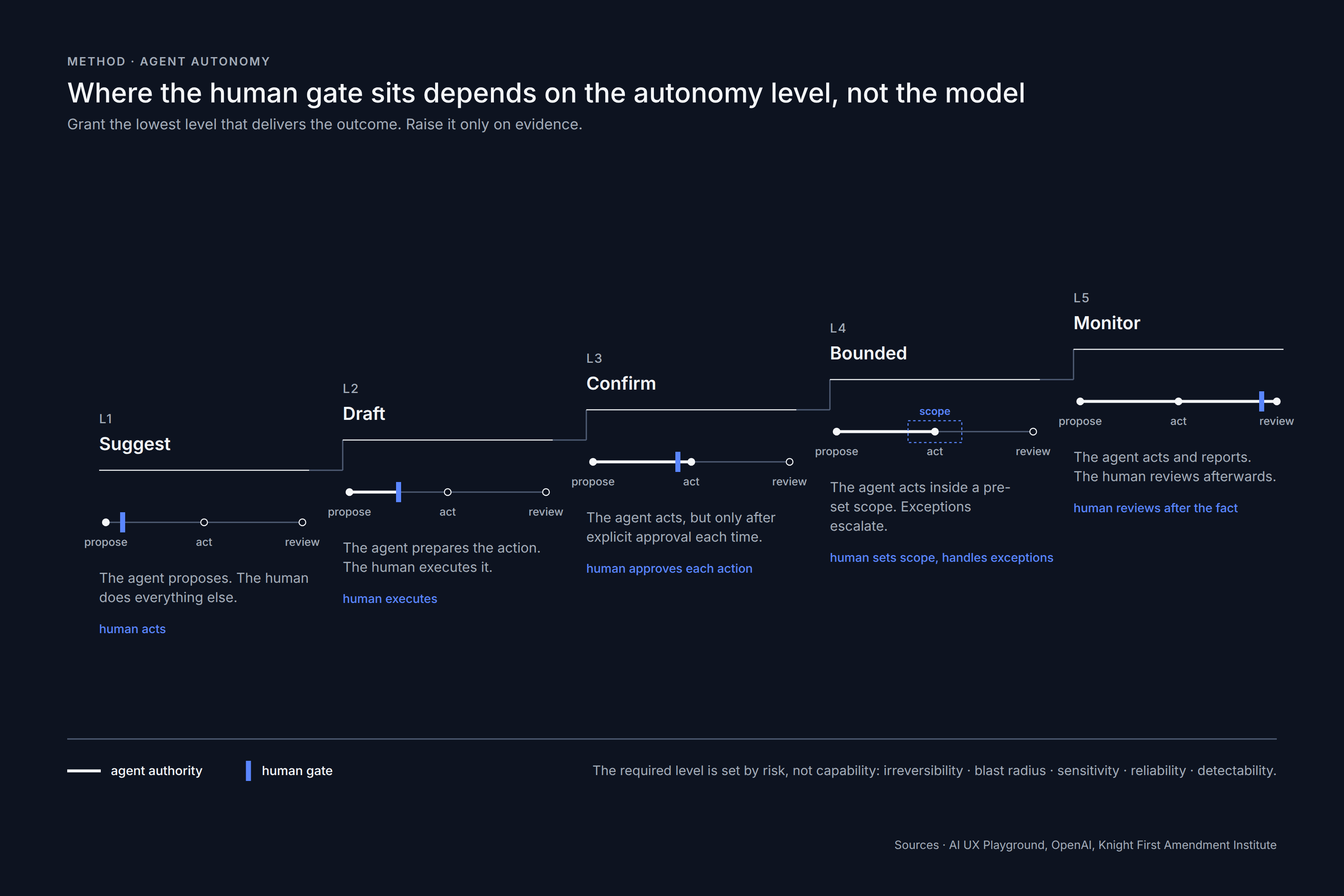
The product had shipped fast under engineering leadership and grown inconsistent — the usual cost of speed. Two things needed judgment at once: a forward-looking AI-agent feature that had to be designed coherently from nothing (setup, configuration, results — a genuinely new interaction pattern), and an information architecture that had accreted rather than been designed, so users and the team were both navigating by memory. Neither was a styling problem; both were structure problems.
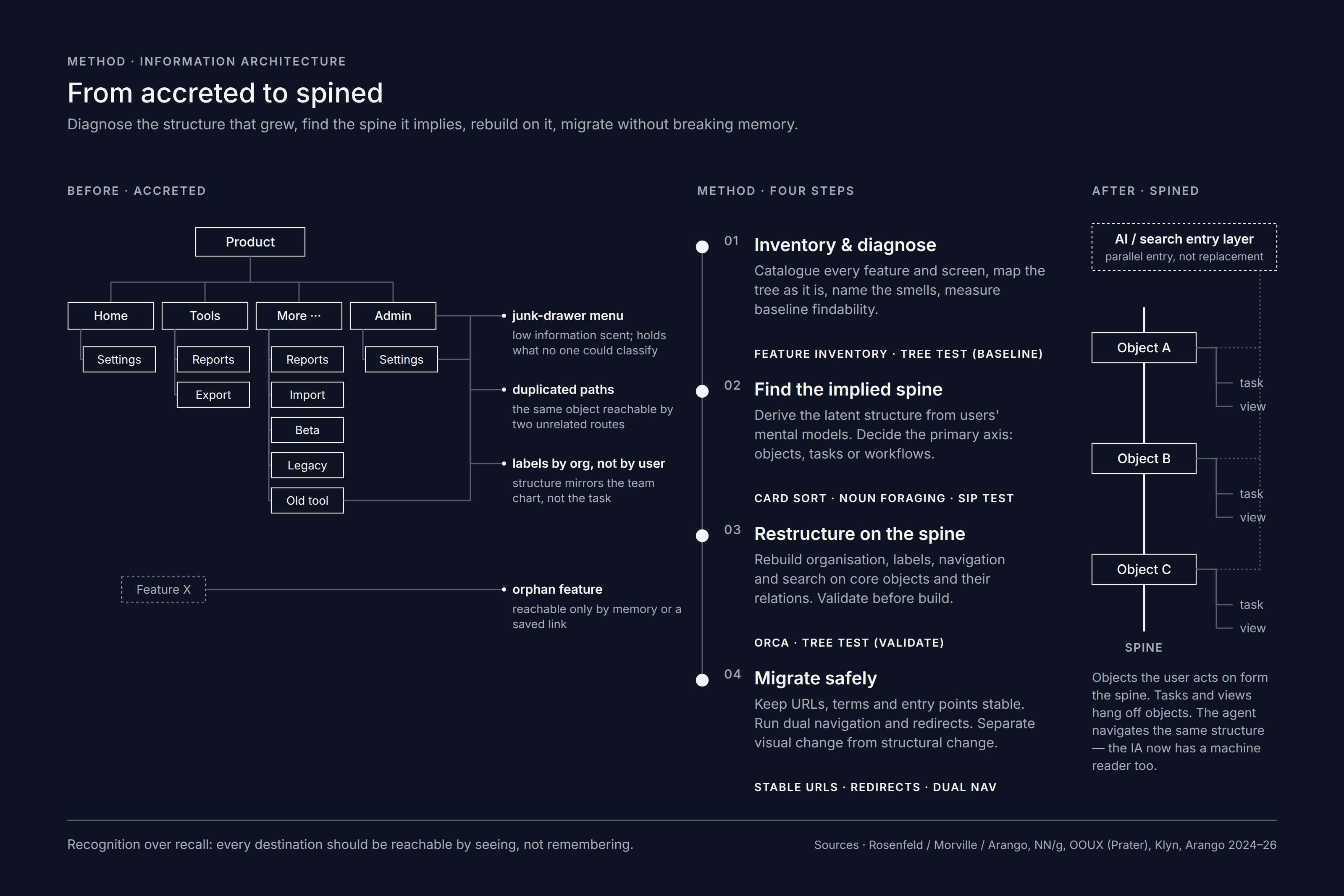
In an engineer-led product, a designer earns trust by improving decisions, not by demanding a redesign. So I worked at the level of structure: for the AI agent, I designed the interaction logic first — what the agent should ask, when it should act, how it should show its work — before any surface, so the feature would read as trustworthy rather than magical. For the IA, I mapped what existed, found the spine it implied, and restructured around that spine rather than imposing a new one. The deliverable was clearer decisions the team could build on — which is why this page can describe it without showing it.
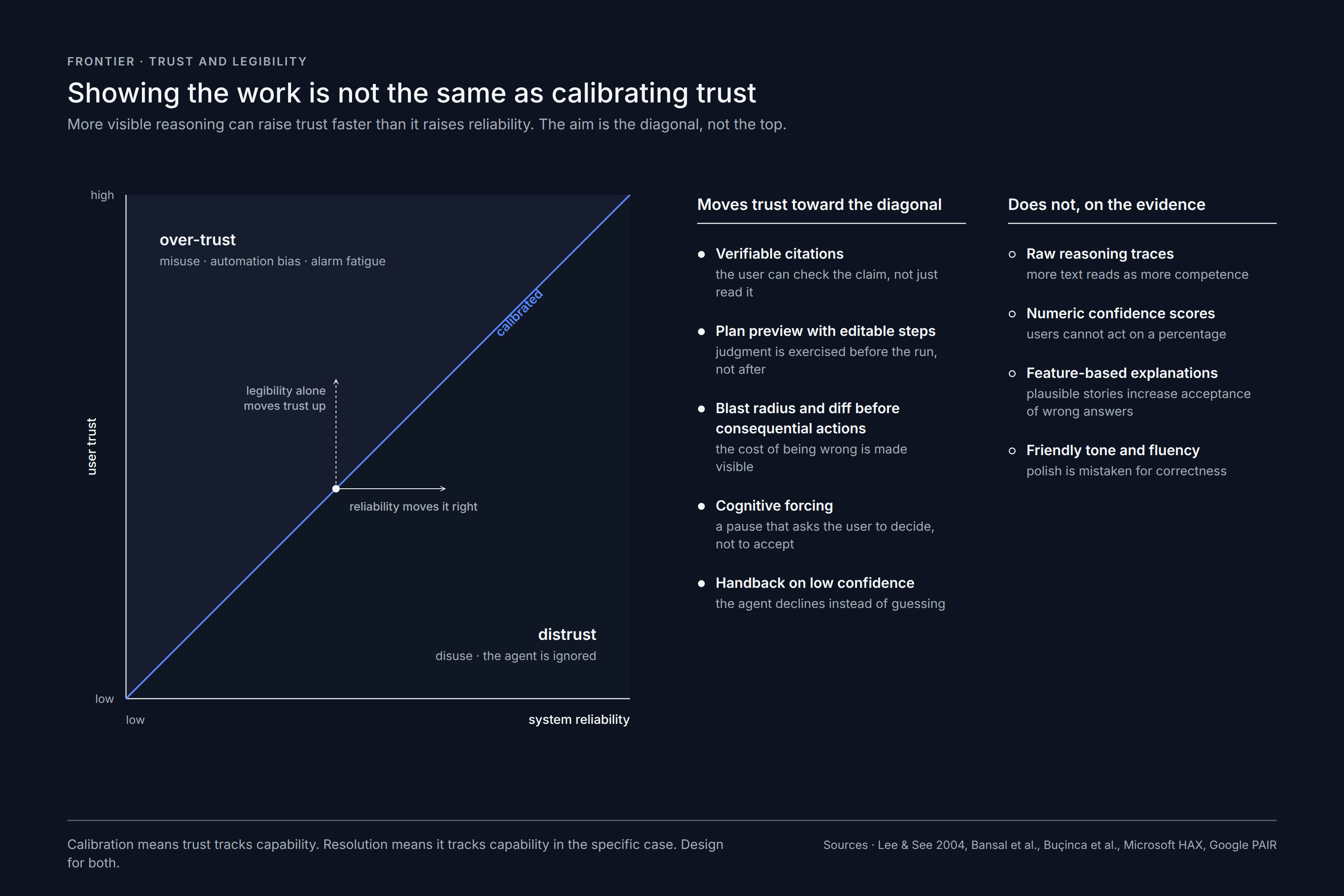
For the AI-agent feature, I designed the end-to-end interaction — how a user sets the agent up, hands it a task, confirms consequential or destructive actions, and reads what it produced — with the agent's reasoning made legible at each step so trust is earned, not assumed. For the information architecture, I restructured the product around a clear spine, so navigation matches how users actually think about the domain, and new features have an obvious place to live. Underpinning both was a competitive-research library — I mapped how the category solves these problems, then decided where the product should follow convention and where it should diverge. The work was strategy and structure; the screens that resulted belong to the client and stay with them.
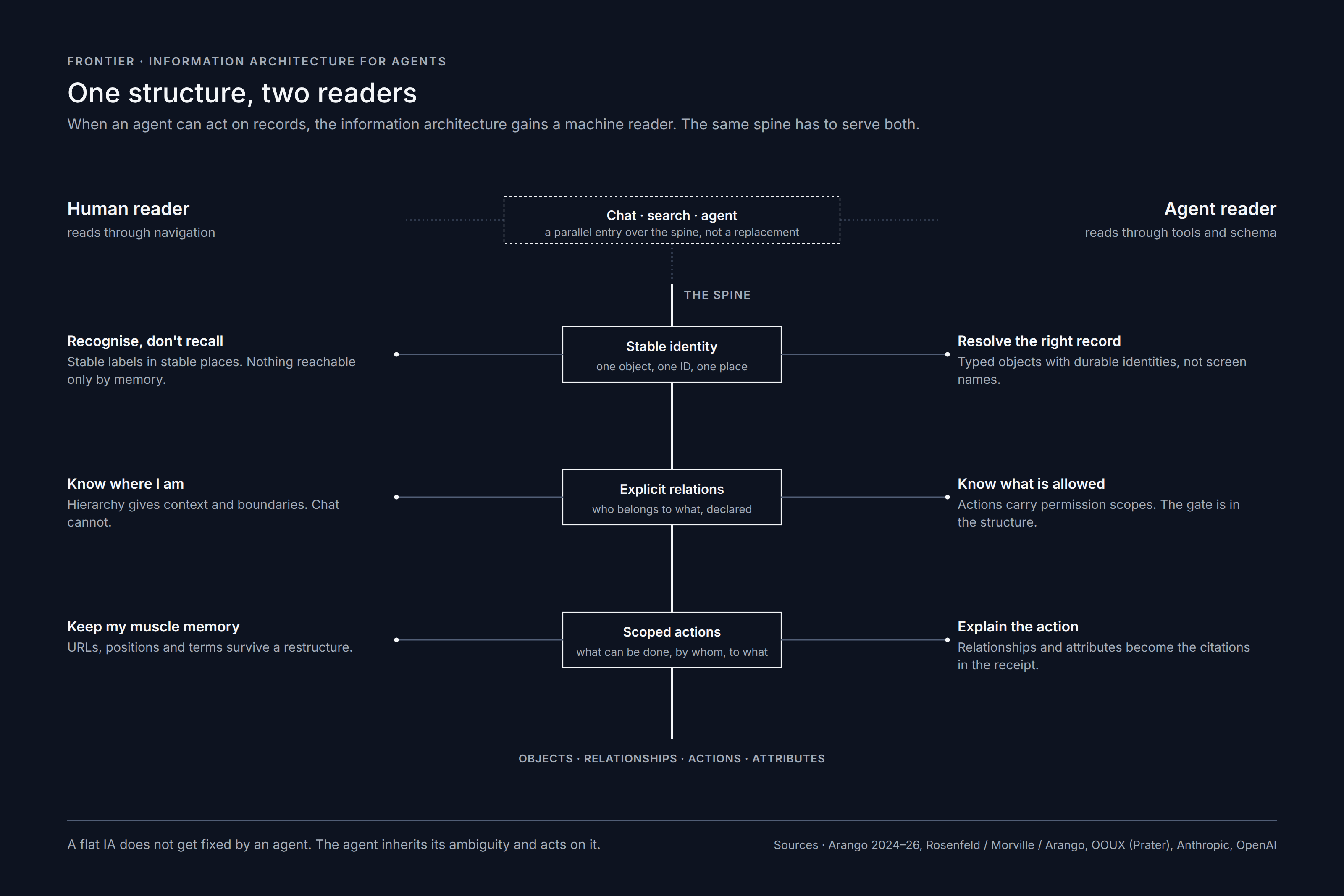
The two engagements meet in one fact: once an agent can act on records, the information architecture gains a second reader. The human reads the structure through navigation; the agent reads it through tools and schema. Stable identities, explicit relationships, and scoped actions serve both at once — the spine is what makes the agent reliable, and the agent is why the spine had to be found. A flat, ambiguous IA doesn't get fixed by an agent; the agent inherits the ambiguity and acts on it.